Amazon Book Description HTML That Converts

Skip the theory? Generate a free book preview in about a minute — no signup, no card.
Try it freeAmazon book description HTML is not there to make your page look fancy. It is there to make a buyer understand the book faster. KDP allows a limited set of formatting tags in the book description field, including bold, italics, paragraphs, line breaks, lists, and simple headings. Used well, those tags turn a dense block of sales copy into a clean retail-page argument: hook, reader fit, benefits, proof, and a next step.
The mistake most authors make is treating HTML as decoration after the real work is done. On Amazon, formatting is part of the selling system. Your description has to read cleanly on mobile, stay within KDP’s 4,000-character description limit, avoid unsupported code, and make the shopper feel certain about what they are buying.
What amazon book description html actually does
Amazon book description HTML controls the readable structure of your product-page copy. It helps you separate the opening hook from the supporting details, turn features into scannable bullets, and prevent the page from looking like a pasted draft. It cannot fix a weak promise, a vague audience, or a mismatch between the book and its category.
That is why KDPBuilder treats the description as metadata sales copy, not decoration. The description supports the purchase decision, while your title, subtitle, keywords, and categories handle other parts of discovery and positioning. If the core copy is not ready yet, start with the Book Description Generator before you format anything.
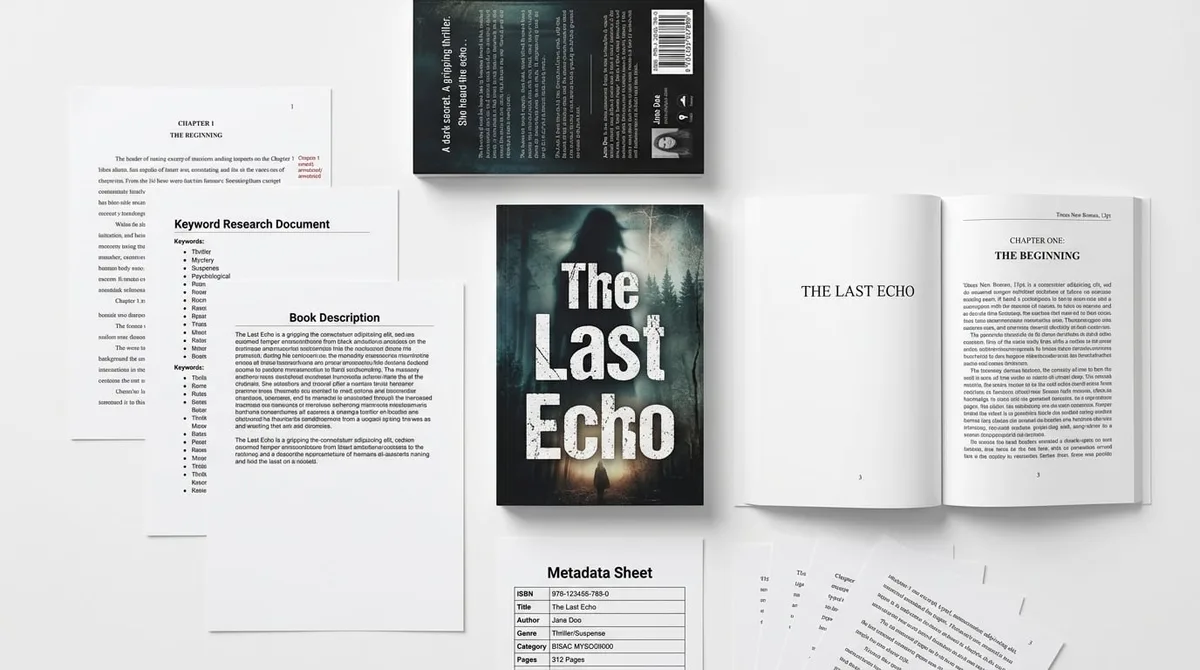
Verified product fact: the KDPBuilder metadata step produces a filled-in KDP listing with title, subtitle, an HTML-formatted description, all 7 backend keyword slots, and category recommendations — not just a blob of text. See a finished metadata sheet: https://kdpbuilder.com/sample-package
HTML is structure, not decoration
Think of amazon book description HTML as a hierarchy tool. A bold opening line tells the shopper what matters first. Short paragraphs separate ideas. Bullets organize benefits. Simple headings can break up longer copy into sections that still read cleanly on a phone.
A useful description usually follows this order:
- State the promise or premise fast.
- Show why it matters to the intended reader.
- Prove the book fits their need, genre, or use case.
- Make the decision easy with a clear, low-friction CTA.
Amazon shoppers skim before they read. If the description has no hierarchy, the strongest reason to buy gets buried in a wall of text.
Why bad formatting hurts conversion
Bad formatting weakens trust. Overdone bold text, random line breaks, giant headings, and template-like copy make a book page feel mechanical. When the description looks generated, shoppers often assume the book itself may be generic too.
Good formatting removes friction. The buyer should be able to answer three questions within seconds: what is this book, who is it for, and why should I choose this one?
The KDP description formatting Amazon supports
KDP allows limited HTML in the description field. The safest approach is to use simple tags that improve readability, not styling tricks. KDP book descriptions can be up to 4,000 characters, so every tag should earn its place. Unsupported code, scripts, CSS, tables, images, and complex styling should not be used because Amazon may strip them or display them inconsistently.
Tags worth using
These are the practical tags most authors actually need in a KDP description:
| Tag | Best use |
|---|---|
| <strong> | Bold the opening hook, key benefit, or a short positioning line. |
| <em> | Use for tone, emphasis, or a lightly dramatic phrase. |
| <p> | Separate paragraphs so the copy breathes on mobile. |
| <br> | Create a line break when you need a tighter visual break. |
| <ul> / <ol> | List benefits, chapter takeaways, features, or steps. |
| <li> | Mark each bullet or numbered item clearly. |
| <h3> | Use sparingly for section labels when the description is longer. |
Use bold for the first hook line when you want the eye to land immediately. Use italics for light emphasis, not every emotional phrase. Use bullets when you need to show multiple benefits quickly. Use paragraphs for story, explanation, or transformation.
If you want to convert clean copy into KDP-ready formatting, use the KDP Description Formatter after the copy is written.
Tags and styling to avoid
Do not use tables for layout, embedded scripts, CSS, images, tracking links, or complex styling. Also avoid excessive headings, stacked formatting, and gimmicks that turn a product page into a cluttered flyer. Unsupported code may be stripped, and anything spammy can make the description look unreliable.
- No scripts or embed code.
- No CSS.
- No images or graphics.
- No tables for visual layout.
- No unrelated external links.
- No misleading time-sensitive claims about price or availability.
- No review manipulation language or sales-rank claims.
Keep the formatting simple enough that the description still reads well if Amazon normalizes part of it. The safer the structure, the less likely your page is to break visually.
Why previewing matters
Always preview the description before you publish. A tag that looks fine in a text editor can behave differently on Amazon’s retail page, especially on mobile. The goal is not to maximize decoration; it is to preserve clarity after Amazon renders the copy.
Previewing also helps you catch spacing problems, repeated line breaks, and awkward emphasis. If the description feels too heavy, simplify it. If it feels too plain, add one strong bold line or a small bullet list rather than overhauling the whole page.
A book description that converts follows a sales hierarchy
The description should work like a sales page in miniature. Conversion comes from reader clarity first, HTML second. If the book promise is muddy, the formatting cannot fix it. A strong description follows a hierarchy: hook, relevance, proof, fit, and call-to-action.
The best description makes the shopper feel understood in the first two lines. Then it gives enough detail to justify the click without burying the promise under summary. The structure changes by format, but the underlying logic stays the same.
Nonfiction description framework
For nonfiction, use this sequence: problem, outcome, credibility, what’s inside, and CTA. Start with the pain point or desired result. Then show the transformation the reader wants. Add a concise proof point if you have one, such as the method, background, or scope of the material. Finish with a clear statement of what the reader will learn or achieve.
A strong nonfiction hook might read: If your household budget keeps breaking by the second week of the month, this guide shows you how to build a weekly money system you can actually maintain.
That line works because it names the reader’s problem, offers a specific outcome, and avoids inflated language. From there, list 3 to 5 concrete benefits such as what the reader will organize, plan, fix, or understand. If you are still shaping the reader promise, the Book Description Generator can help turn a rough idea into a cleaner hook.
Fiction description framework
For fiction, lead with character, conflict, stakes, emotional promise, and genre cues. The reader needs to know who the story follows, what goes wrong, and why it matters. You are not summarizing every subplot; you are building tension and intrigue.
A romance description might foreground forced proximity, second chances, or enemies-to-lovers tension. A thriller description might start with the body, the secret, or the deadline. A fantasy description might anchor the reader in the world, then sharpen the danger. The HTML should support the tension without turning the page into a theatrical poster.
Low-content and activity book framework
For low-content, puzzle, journal, coloring, and activity books, emphasize use case, audience, interior features, giftability, and format details. These buyers want to know how the book will be used and why it fits the person they are shopping for. Keep the copy clear and practical.
For example, a puzzle book description should mention puzzle type, difficulty feel, interior structure, and intended audience when accurate. A journal description should highlight prompts, page layout, or theme. A coloring book should emphasize style, audience, and image variety. Avoid keyword stuffing; use the description to explain the buyer outcome, not to cram search phrases into every line.
Verified product fact: the metadata workflow is built to fill the whole listing, including title, subtitle, HTML-formatted description, all 7 backend keyword slots, and category recommendations. That matters because the description alone is only one piece of the page. See the finished metadata sheet: https://kdpbuilder.com/sample-package
Insider pro-tip: write the description in plain language first, then format it. If the copy only works because of bold text or line breaks, the message is too weak. Good formatting should reveal the sales argument, not invent it.
Amazon book description HTML template
Here is a reusable template you can adapt. The point is not to use the same voice for every book. A cookbook, puzzle book, memoir, and business book should not sound identical. Use the template as a structure, then adjust the tone to match genre expectations and buyer intent.
Plain text version
Hook: This book helps [reader] achieve [outcome] without [pain point].
[Short paragraph explaining the problem, premise, or promise.]
[Short paragraph describing what is inside and why it matters.]
- [Specific benefit 1]
- [Specific benefit 2]
- [Specific benefit 3]
[Proof or positioning line: what makes this book different, useful, or credible.]
Read this if you want [reader result].
KDP-ready HTML version
<p><strong>This book helps [reader] achieve [outcome] without [pain point].</strong></p>
<p>[Short paragraph explaining the problem, premise, or promise.]</p>
<p>[Short paragraph describing what is inside and why it matters.]</p>
<ul>
  <li>[Specific benefit 1]</li>
  <li>[Specific benefit 2]</li>
  <li>[Specific benefit 3]</li>
</ul>
<p>[Proof or positioning line: what makes this book different, useful, or credible.]</p>
<p><strong>Read this if you want [reader result].</strong></p>
Mini example: activity book
<p><strong>A calming dinosaur coloring book for kids who love big creatures, bold outlines, and screen-free quiet time.</strong></p>
<p>Inside, young artists can color friendly dinosaurs, simple prehistoric scenes, and playful designs made for relaxed coloring sessions at home, in the car, or during rainy afternoons.</p>
<ul>
  <li>Large, easy-to-color illustrations</li>
  <li>Great for dinosaur fans and beginner colorers</li>
  <li>A simple gift idea for birthdays, holidays, and travel bags</li>
</ul>
<p><strong>Pick this up for a young dinosaur fan who needs a fun, quiet creative activity.</strong></p>
When to simplify the template
Simplify the template when the book is short, visual, or highly familiar to the buyer. Some books only need a bold hook and three bullets. Others, such as business books or memoirs, may need more narrative space. The best template depends on how much explanation the buyer expects before clicking.
For a cookbook, the promise may be immediate and practical. For a memoir, the emotional angle matters more. For a puzzle book, the interior features do the heavy lifting. Use enough structure to make the page scannable, but do not force every category into the same mold.
Common formatting mistakes that make books look generated
The fastest way to make a retail page look machine-made is to over-format it. Readers notice when every line is trying too hard. The description should look designed, not decorated.
The AI-generated description smell
Common tells include repeated bold phrases, ALL CAPS, emoji clutter, giant headings, and generic language such as “unlock,” “transform your life,” or “discover the secrets” with no concrete detail. A human-sounding description uses specific reader language and gives a believable reason to care.
Another red flag is repetition. If the same promise appears in three different sentences, the copy feels padded. Say it once, clearly, then move into support and specifics.
Keyword stuffing vs metadata strategy
The description is not the place to cram every search phrase you can think of. Use metadata fields properly: title, subtitle, backend keyword slots, and categories each serve a different purpose. The description should reinforce positioning and conversion, not carry the entire search strategy.
Stuffing keywords into the description often makes the page harder to read and can lower trust. Readers do not reward awkward repetition. They reward clarity, relevance, and a sense that the book was written for them. For the backend side of the listing, see KDP Keyword Research: Fill All 7 Slots.
Mobile-first readability
Most shoppers will see the description on a phone. That means short paragraphs, clean spacing, and early value matter more than fancy markup. If the first screen is a wall of text, the reader may never scroll.
- Keep paragraphs to 2 to 4 sentences when possible.
- Put the strongest line near the top.
- Use bullets to reduce visual density.
- Limit headings to only what helps scanning.
- Use formatting to improve rhythm, not to fill space.
When the page feels calm and organized, it feels more credible. That is the real design win.
Mistakes to avoid in a KDP description
| Mistake | Why it hurts | Better approach |
|---|---|---|
| Too many bolded lines | Feels pushy and cluttered | Bold only the opening hook or one key positioning line |
| Keyword stuffing | Reduces readability and trust | Use natural language and let keywords do their job in metadata |
| Unsupported HTML | May be stripped or render inconsistently | Stick to simple KDP-friendly tags |
| Generic claims | Sounds AI-generated | Use concrete reader language and specific benefits |
| Too much copy on the first screen | Hurts mobile scanning | Break copy into short paragraphs and bullets |
Where book descriptions fit in KDP metadata optimization
The description is one part of the listing, not the whole discovery strategy. It does not replace your title, subtitle, seven backend keyword slots, or categories. Those fields work together, but they do different jobs. Title and subtitle signal the book at a glance. Keywords and categories help discovery. The description helps the shopper decide.
For a broader view of the listing system, see KDP Metadata Optimization: Titles, Keywords & Categories. If you are building out your search terms, KDP Keyword Research: Fill All 7 Slots can help you think about the backend side of the listing. And if your category choice is part of the problem, KDP Categories: Pick 3 You Can Rank In shows how category fit supports the listing as a whole.
Description vs keywords
The description should not duplicate your keyword strategy line for line. It should read naturally while reinforcing the promise behind the book. Keywords help your book get found in relevant places; the description helps convert the browse into a click and the click into a purchase.
If you try to force search terms into the description, you usually lose readability. A good description sounds like a real recommendation to a real reader.
Description vs categories
Categories tell Amazon where the book belongs. The description tells the shopper why it belongs on their shelf or in their cart. Category fit matters because it shapes expectation. Description fit matters because it seals the decision.
When those two are aligned, the page feels coherent. When they conflict, the shopper hesitates. That is why it is worth thinking about the listing as a system, not a single paragraph.
Conversion after discovery
Discovery brings the shopper to the page. Conversion happens when the page answer is clear: who is this for, what does it solve, and why choose this one? That is why amazon book description HTML is best treated as conversion formatting, not ranking magic.
Use the metadata to get discovered. Use the description to make the reader feel certain.
Final checklist before you paste into KDP
Before you paste your description into KDP, check the copy, the HTML, and the policy risk. Because KDP book descriptions can be up to 4,000 characters, you do not want to waste space on unnecessary markup or filler. Keep the structure lean and purposeful.
Copy checklist
- Does the first line create a real reason to keep reading?
- Does the description name the right reader early?
- Does it show the outcome, benefit, or stakes clearly?
- Are the bullets specific rather than generic?
- Does the CTA feel natural instead of pushy?
HTML checklist
- Are all tags closed properly?
- Are you using only simple, supported formatting?
- Is the page readable without special styling?
- Did you keep bold, headings, and bullets under control?
- Does it still look clean on mobile?
Policy checklist
- No misleading or time-sensitive claims about price or availability.
- No sales-rank claims.
- No review manipulation language.
- No unrelated external links.
- No unsupported code, tables, scripts, CSS, or images.
The final test is simple: if the bold text disappeared, would the description still persuade the right reader? If yes, your HTML is doing its job. If not, fix the sales copy before adding more tags.
Use the Book Description Generator when you need a sharper hook or clearer reader promise. Use the KDP Description Formatter when the copy is ready and you need clean KDP-friendly markup.
If you are building the full listing, start at the free tools hub and then try the free trial when you are ready to test the complete workflow from description to metadata.
FAQ
What HTML can I use in an Amazon book description?
KDP allows only a limited set of HTML in the description field. In practice, authors usually rely on bold, italics, paragraphs, line breaks, bullets, numbered lists, and simple headings. Unsupported code, scripts, CSS, tables, images, and complex styling should not be used because Amazon may strip them or display them inconsistently.
How do I format a KDP book description with bullets and bold text?
Write the copy first, then wrap the most important hook line in bold, separate ideas with short paragraphs, and use bullets for benefits or features. Keep the structure simple so it stays readable on mobile. A formatter can help convert plain text into clean KDP-ready HTML without adding unnecessary markup.
Does Amazon book description HTML help with ranking or only conversion?
Amazon book description HTML should be treated as a conversion tool, not a ranking strategy. It can make the page easier to read, which helps shoppers understand the offer faster, but discovery still depends heavily on title, subtitle, categories, and backend keywords.
Why is my KDP description formatting not showing correctly?
Usually the problem is unsupported or overly complex HTML. Amazon may strip certain tags, flatten styling, or change the way the page renders on mobile. The safest fix is to simplify the markup, remove anything unsupported, and preview the description before publishing.
What makes a book description that converts?
A converting description starts with a clear hook, names the right reader, and explains the payoff quickly. It then adds enough detail to build trust and closes with a simple call-to-action. Good formatting helps, but the real conversion driver is a clear sales hierarchy: hook, proof, reader fit, and next step.
Which KDP tools help format a book description before publishing?
The most practical tools are the Book Description Generator for drafting the sales copy and the KDP Description Formatter for converting it into clean HTML. Use the generator when you need a stronger message, and use the formatter when the copy is ready but needs to be cleaned for KDP. Together, they help you publish a description that looks intentional instead of generated.