How to Make a Puzzle Book for Amazon KDP
Skip the theory? Generate a free book preview in about a minute — no signup, no card.
Try it freePuzzle books are a durable KDP category because demand is evergreen and buyers come back for the next volume. The work is in the planning: pick the right puzzle type for your audience, get difficulty and layout right, and ship clean solutions. Here’s how to do that without spending weeks on grid math.
Pick a puzzle type and audience first
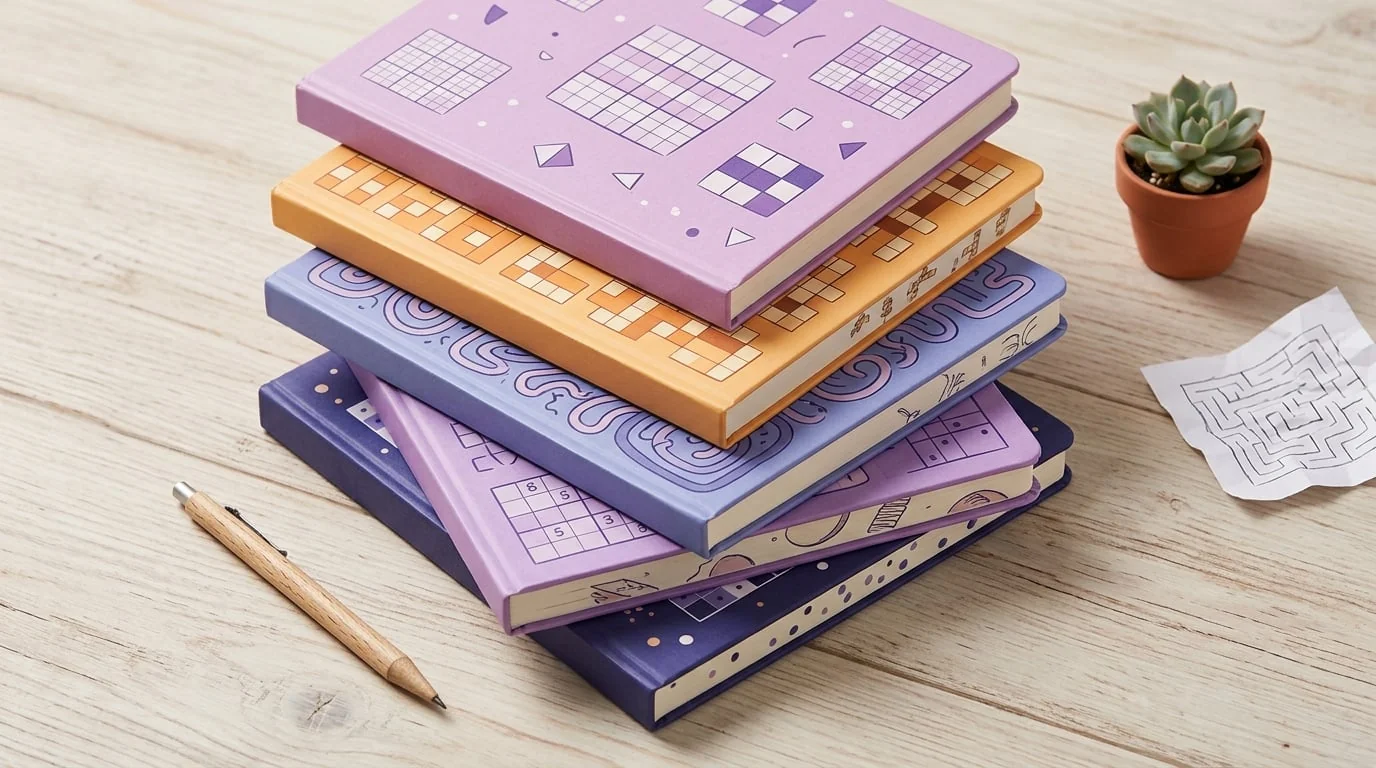
Each puzzle type has a different buyer. Sudoku and crosswords skew toward adults and seniors; mazes and simple word searches work for kids and gifts. Decide whether you’re making a focused single-type book (easier to rank for “sudoku for seniors,” “themed crossword,” etc.) or a mixed activity book aimed at gift and travel buyers.
- Sudoku — classic, strong large-print demand. Needs guaranteed unique solutions.
- Word search — easiest to theme; see how to make a word search book.
- Crossword — higher perceived value, more production effort.
- Mazes — great for kids; scale difficulty by grid size.
Plan difficulty progression
Buyers like a book that eases them in. Order puzzles from easy to hard, or group them into clearly labeled sections. For sudoku, that means controlling the number of givens; for mazes, the grid size; for word search, the grid and word count. A printed difficulty label on each puzzle helps people pick where to start.
Puzzle book builder: choose puzzle types, difficulty mix, page count, and trim size.
Generate the puzzles
The riskiest part of a puzzle book is correctness: a sudoku with multiple solutions or an unsolvable maze will generate refunds and bad reviews. The Puzzle Book Creator uses validated generators — unique-solution sudoku, placeable word lists, and verified maze paths — and builds the matching solutions section automatically. For single-type books, use the dedicated Sudoku, Crossword, or Word Search creators.
Trim size, layout, and margins
8.5 x 11 in is the workhorse size for puzzle books because it fits larger grids and supports large print; 6 x 9 in suits compact books. Read the trim size guide to decide. Whatever you choose:
- One puzzle per page — never split a grid.
- High-contrast grids with clear line weights.
- Adequate inner margins so the spine doesn’t eat content — see the bleed and margins guide.
- A labeled solutions section at the back.
Cover, metadata, and publishing
Get exact cover dimensions from the cover size calculator, and make the puzzle type, count, and “large print” legible as a thumbnail. Write a description that states exactly what’s inside — our guide on descriptions that convert covers the structure. Before uploading, run the upload checklist and preview a proof.
For broader strategy on the category, see our guide to profitable puzzle books.
Frequently Asked Questions
Which puzzle type is best for beginners to publish?
Word search and maze books are the simplest to produce because the rules are forgiving and grids are easy to lay out. Sudoku is also beginner-friendly if your generator guarantees a unique solution. Crosswords take the most effort because clues need to be written and checked.
Should I mix puzzle types in one book?
Both approaches work. Single-type books (all sudoku, all word search) are easier to title and target in search. Mixed activity books appeal to gift buyers and travel use. Decide based on your audience rather than mixing types just to fill pages.
How do I handle solutions?
Always include a solutions section, usually at the back of the book, with each answer clearly labeled to match its puzzle number. Buyers expect to be able to check their work, and missing or mismatched solutions are a common source of negative reviews.
What page count should I aim for?
A typical puzzle book runs 80 to 120 interior pages including solutions. Page count affects printing cost and the minimum price you can set, so confirm the economics before locking in a length.
Turn this idea into a book — free sample
Type a book idea and we'll generate a real cover preview in about a minute. No signup, no card.