AI Book Generator vs AI Publishing Studio

Skip the theory? Generate a free book preview in about a minute — no signup, no card.
Try it freeMost AI book generators stop at the first useful artifact. They give you a chapter draft, cover image, puzzle grid, journal page, or interior template. A publishing studio has a different job: turn one idea into a coherent KDP package — manuscript, edited structure, cover direction, interior layout, metadata, category thinking, and policy-aware export files. If you are comparing an AI book generator vs AI publishing studio, the real question is not “Which one is faster?” It is “Which one leaves me with a book that looks intentional on Amazon?”
AI Book Generator vs AI Publishing Studio: The Core Difference
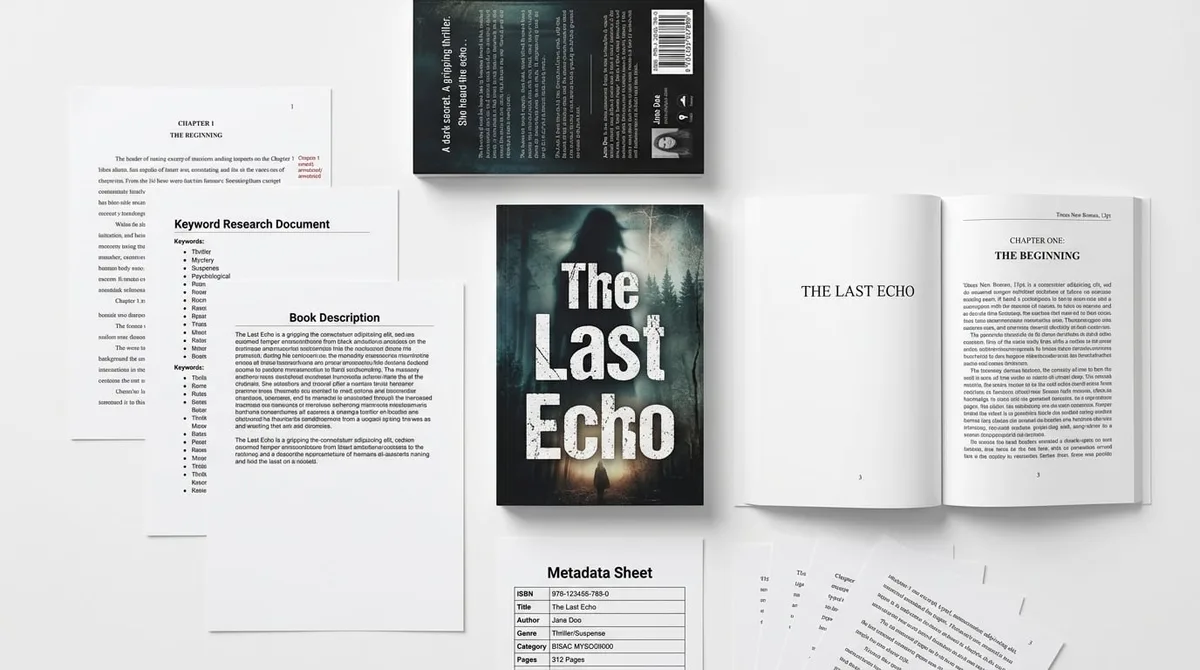
The difference is not speed. It is responsibility. A generator can create a draft, a cover concept, or a set of pages, then hand the next problem back to you. A studio connects the decisions that make a book feel like one retail product: promise, structure, design, formatting, metadata, and final file preparation.
That distinction matters most for publishers who have already tested quick AI tools and found the same problem over and over: the output is fast, but the finished book still looks assembled from disconnected parts. At the middle of the funnel, the sharper question is not “Can AI make this?” It is “Will this package hold up beside real competing books in the Amazon store?”
KDPBuilder’s position is simple: stop publishing books that look generated; start building books that look designed. The difference is a studio pipeline with editing, design, and QA gates — not a bigger prompt. Judge the output yourself.
Generator: one prompt, one asset
An AI book generator usually starts with a single instruction and ends with a single deliverable. That deliverable might be draft text, an outline, a cover mockup, a puzzle set, or a KDP interior file. For example, a prompt for a low-content notebook may give you lined pages and a simple cover concept in minutes, but it will not tell you whether the theme, trim size, and interior spacing feel polished.
This is why a generator is best understood as an asset creator. It can help you make one component quickly, but it rarely coordinates the full book around a reader, category, and listing strategy. If you want to compare where that gap shows up most clearly, compare publishing tools before you commit to a workflow.
Studio: idea to publish-ready package
An AI publishing studio starts earlier and finishes later. It helps refine the idea, define the reader, shape the manuscript, align the cover to the promise, format the interior, write metadata, and prepare export-ready files. Instead of one prompt creating one file, the studio manages a sequence of decisions that make the book feel intentional.
That commercial difference matters because Amazon shoppers judge the whole package. If the cover, title, interior, and description all point in different directions, the book feels generated. If they all support one clear promise, the book feels publishable.
What an AI Book Generator Usually Produces
An AI book generator can be useful, especially when you need a starting point. Common outputs include draft text, outlines, low-content pages, puzzles, journals, cookbooks, covers, and KDP interiors. That is why people search for terms like ai kdp book generator, kdp generator, kdp interior generator, puzzle book generator, and free ai book cover generator.
The hidden gap is simple: having a manuscript file or a cover file is not the same as having a coherent book product. A cover without the right subtitle, a manuscript without formatting, or interiors without page flow still leave the publisher with a lot of work to do.
Generators can absolutely help with brainstorming, first drafts, and asset creation. The problem is that they often stop where publishing begins. Formatting, editing, metadata, and positioning are usually left for the publisher to figure out later.
Text generators
Text generators can create chapter drafts, topic lists, summaries, and book starts. A nonfiction prompt might give you a workable outline in one pass, but the result still needs fact-checking, sequencing, source review, and audience fit. Without that next layer, the manuscript can read like a collection of sections rather than a book with a point of view.
Cover generators
Cover generators are helpful for testing visual direction, but they are not the same as a retail-ready cover system. A good KDP cover has title hierarchy, subtitle placement, contrast, genre cues, and spine logic for paperback formats. A quick image output may look impressive in a preview while still failing the practical test: does this communicate the book in one second at thumbnail size?
KDP interior generator tools
KDP interior generator tools can create page templates, lined pages, puzzle grids, or simple structured layouts. That is useful for speed, but interior design is more than page count. It also includes margins, spacing, page numbering, section breaks, readability, and print specifications that fit the trim size.
For paperbacks, common trim sizes include 6 x 9 inches and 8.5 x 11 inches. If you use a full-bleed paperback interior, you also need an added 0.125 inch bleed on the top, bottom, and outside edges. Those details are easy to miss when a tool only generates pages, not a final production system.
Puzzle book generator and journal creator AI tools
Puzzle book generator and journal creator AI tools are popular because they can produce repetitive structures quickly. A puzzle generator may create word searches, mazes, sudoku grids, or activity pages. A journal creator AI tool may generate prompts and lined pages in batches. But repetition alone does not create a strong book. Readers still expect a clear theme, a sensible difficulty curve, and a layout that feels intentional.
Insider pro-tip: if a generated interior looks busy, simplify before you publish. Reduce font variety to one or two families, keep one spacing system throughout, and make every page type repeat on purpose. That single decision can make a low-content book feel much more deliberate.
What an AI Publishing Studio Adds
An AI publishing studio is not a widget; it is a workflow. It moves through idea refinement, audience fit, manuscript structure, design system, cover direction, interior layout, metadata, and final files. The key difference is that it treats each step as part of the same commercial package.
That matters because every element should signal a real book made for a real reader, not a bundle of AI outputs. A studio asks whether the concept, the cover, the interior, and the listing all agree. If they do not, the package is not ready yet.
Metadata is a major reason the studio approach wins. Title, subtitle, description, keywords, categories, and reader promise need to support each other. If the book says one thing on the cover, another thing in the description, and something else in the category, shoppers feel the mismatch immediately.
KDPBuilder runs every book through a six-phase studio pipeline — Discovery, Writing, Editing, Design, Covers, Publishing — instead of a single generate-and-dump step. Walk through the pipeline free.
Manuscript plus market positioning
Studio-led manuscript work does more than create text. It positions the content for a specific buyer. That can mean a clearer angle, tighter chapter order, more useful examples, or a simpler promise that matches the market. The book becomes easier to understand before a reader even opens it.
Cover plus interior design consistency
A studio also ties the cover and interior together. If the book is a guided journal, the cover should promise calm structure, and the interior should deliver repeated prompts with enough white space to write. If the book is a puzzle book, the cover should signal the puzzle type, and the interior should support the same difficulty and theme.
Metadata that matches buyer intent
Good metadata is not decoration. It is part of the product. The title, subtitle, and description should answer one question clearly: why should this reader choose this book over the others on the page? A studio builds that answer into the package instead of leaving it for the seller to patch together later.
The AI Publishing Platform Difference Buyers Actually Feel
The AI publishing platform difference is not simply more features; it is fewer gaps between idea and upload. A generator gives raw files. A studio gives a coordinated publishing package. Buyers feel that difference because the final book either looks assembled from pieces or designed as one system.
Here is the practical difference side by side:
| Area | Generator | Publishing Studio |
|---|---|---|
| Output | Single asset: text, cover, puzzle grid, or interior | Coordinated package: manuscript, cover, interior, metadata, and files |
| Workflow | Prompt to file | Idea to upload-ready files |
| Quality control | Mostly on the publisher after generation | Built into the process through editing, design, and QA gates |
| Commercial readiness | Partial; useful for testing and components | Designed for retail presentation and buyer clarity |
| Best use | Brainstorming, rough drafts, simple repetitive assets | Books that need structure, polish, metadata, and consistent packaging |
The difference is also visible in the details most buyers never name directly: typography, page flow, cover hierarchy, trim size, description quality, AI policy awareness, and export settings. When those pieces align, the book looks like it belongs in the marketplace. When they do not, the book can look cheap even if the raw content is decent.
Practical checklist for retail-ready presentation:
- Does the cover title read clearly at thumbnail size?
- Does the subtitle match the actual content?
- Is the interior formatted for the chosen trim size?
- Are headings, margins, and page numbers consistent?
- Do the keywords and categories match the reader promise?
- Are AI disclosures handled accurately in the upload workflow?
- Are the files ready for KDP export without extra cleanup?
Asset creation vs product creation
Asset creation gives you building blocks. Product creation turns those blocks into something a buyer can understand and trust. A single generated puzzle grid is an asset. A puzzle book with a clear theme, difficulty logic, page count strategy, and cover promise is a product.
Prompt output vs publishing workflow
Prompt output is only the first step. Publishing workflow includes revision, layout, consistency checks, metadata, and export. That extra work is exactly what turns “this was generated” into “this was published well.”
Cheap files vs retail-ready presentation
Cheap files can be enough for experimentation, but they are not the same as retail-ready presentation. A book that looks unfinished, mismatched, or generic will not help the reader trust the offer. The studio approach improves that trust by making each part support the same message.
When a Generator Is Enough — and When It Is Not
A generator can be enough in the right situation. If you want to brainstorm, create a rough outline, build a simple interior, or validate a topic quickly, a generator can save time. It is useful when the goal is speed over polish.
It starts to break down when the book depends on design, structure, or trust. That includes competitive nonfiction, cookbooks, puzzle books, journals, children’s books, and other formats where layout and presentation affect buyer confidence. In those categories, the difference between a rough file and a coherent product is hard to ignore.
That is also why a free puzzle generator for KDP or a Book Bolt free alternative may help you create components, but it will not necessarily produce a differentiated publishing package. You still need a system that connects the pieces into one marketable whole.
- Use a generator to test the idea in minutes.
- Review whether the concept has a clear buyer and category.
- Check whether the book needs stronger layout, structure, or branding.
- Upgrade to a studio when the market expects polish.
- Prepare the KDP files only after the package reads like one book, not five tools.
Use a generator for speed
Use a generator when the first goal is momentum. For example, a quick outline can help you decide whether a topic deserves more work. A basic interior can help you see whether a journal format feels useful. In those cases, the generator is a fast way to test a direction.
Use a studio for market readiness
Use a studio when the goal is to publish something that feels complete. Market readiness means the cover, interior, metadata, and manuscript all fit together. If a book needs to compete in a crowded niche, this is where the studio becomes the better choice.
Examples: Cookbook, Puzzle Book, and Journal Workflows
Different formats expose the generator-versus-studio gap in different ways. A cookbook needs structure. A puzzle book needs usability. A journal needs coherence. In each case, the studio adds checks that a single generator output usually does not provide.
AI cookbook generator vs studio cookbook package
An AI cookbook generator can draft recipes quickly, which is useful for ideation. But a studio checks the book structure, the consistency of recipe formatting, the ingredient measurements, the disclaimers, and the interior usability. It also helps position the cover so the book looks like a specific type of cookbook rather than a random collection of recipes.
For a concrete example, a slow-cooker cookbook concept should not just list recipes. It should make the promise obvious on the cover and reinforce it in the interior with clear prep times, ingredient lists, serving information, section flow, and readable recipe cards. That is the difference between a text dump and a usable cookbook. If you are weighing this against other workflow tools, our KDPBuilder vs Canva publishing fit comparison explains where design-only tools stop and publishing workflow begins.
KDP puzzle generator vs studio puzzle book package
A KDP puzzle generator can produce puzzle content, but a studio considers the difficulty curve, answer keys, page count, theme, cover promise, and production specs. A puzzle book needs to feel balanced, not random. Too many easy pages or mismatched puzzle types can make the book feel assembled rather than designed.
The same is true for page count and theme consistency. A puzzle book with a title that promises a family-friendly challenge but an interior that feels uneven will not read as polished. The studio prevents those mismatches before upload.
Journal creator AI vs designed guided journal
A journal creator AI can generate prompts and repeatable layouts. That is useful if you want to move fast. But a studio turns prompts into a guided experience with a clear tone, a repeatable rhythm, and a cover system that matches the interior style.
That matters because journals are often bought for the experience they promise, not just the pages inside. If the structure feels inconsistent, the book loses clarity. A studio makes the whole thing feel intentional from cover to last page.
Amazon KDP AI Guidelines and Policy: What Still Matters
Amazon KDP AI guidelines and Amazon KDP AI policy still matter no matter which tool you use. Tools do not remove publisher responsibility. The account owner remains responsible for rights, quality, and accurate disclosures during the title setup and publishing process.
One important fact to keep in mind is that KDP requires publishers to disclose AI-generated text, images, or translations during title setup. KDP also distinguishes AI-generated content from AI-assisted content. That distinction matters because using AI as a helper is not the same as publishing fully AI-generated material, and the workflow should reflect that difference accurately.
Disclosure is part of the process, not a workaround. It does not make a weak book stronger, and it does not replace editing, formatting, or rights checks. It simply keeps the workflow transparent and aligned with the information KDP asks publishers to provide.
AI-generated vs AI-assisted content
AI-generated content is content produced by AI in a way that makes the tool the primary creator. AI-assisted content involves human direction, judgment, and revision with AI as one part of the process. In practical terms, the publisher still has to review the result, verify the content, and upload the book responsibly.
Why disclosure does not equal differentiation
Disclosing AI does not make a book stand out. It only makes the process transparent. Differentiation still comes from packaging: the structure, the cover, the layout, the metadata, and the reader promise all have to work together.
If a workflow is policy-aware, it can reduce avoidable upload and quality problems. That is one more reason a publishing studio has an advantage over a one-click generator. For a broader workflow comparison, see KDPBuilder alternatives: use us or use DIY?.
Best AI Book Generator Alternative: What to Look For
The best AI book generator alternative should produce a coordinated book package, not just faster drafts. If you are comparing tools, look beyond the number of prompts or the speed of output and ask whether the system helps you publish a book that looks finished.
Use this evaluation checklist:
- Does it help shape the manuscript, not just generate it?
- Does it create a cover that matches the book’s promise?
- Does it support interior formatting for KDP-ready files?
- Does it help with metadata, keywords, and categories?
- Does it show how the workflow handles quality checks?
- Does it make sample output visible before you commit?
- Does it support policy-aware publishing decisions?
If a tool only accelerates drafting but leaves packaging to you, it is still a generator. If it helps coordinate the whole book system, it behaves more like a studio.
Why KDPBuilder is a studio, not a cheap generator: the point is not just creating content faster. The point is building a manuscript, cover, interior, and metadata set that all support the same marketable idea. That is what makes the book look designed rather than assembled.
Before you choose a workflow, inspect the tool stack, the sample output, and the publishing steps. A serious KDP workflow should make its quality process visible before asking you to trust the final files.
FAQ
What is the difference between an AI book generator and an AI publishing studio?
An AI book generator usually creates one asset from a prompt, such as text, a cover, a puzzle set, or a basic interior. An AI publishing studio turns the idea into a complete KDP package with manuscript, design, metadata, and export-ready files. The studio approach is more focused on commercial readiness.
Is KDPBuilder an AI KDP book generator or a publishing studio?
KDPBuilder is positioned as a publishing studio. It is built to help connect the manuscript, cover, interior, and metadata so the final book feels coordinated. That distinction matters if you want the output to look designed rather than generated.
Can a KDP interior generator make a complete publish-ready book?
It can create an interior file, but that is only one part of the job. A publish-ready book also needs the right trim size, margins, page flow, cover alignment, metadata, and KDP upload decisions. Without those pieces, the interior is just one component.
Is a free AI book cover generator good enough for Amazon KDP?
It may be enough for a rough concept or early testing, but not necessarily for a retail-ready final cover. A KDP cover has to communicate genre, title hierarchy, and readability at thumbnail size. If those pieces are weak, the cover may look generated rather than professional.
Do the Amazon KDP AI guidelines allow AI-generated books?
KDP allows publishers to submit books that use AI-generated content when the publisher follows the required disclosure rules and remains responsible for the content, rights, and quality. KDP requires disclosure of AI-generated text, images, or translations during title setup, and it distinguishes AI-generated content from AI-assisted content. The important part is accurate disclosure, responsible review, and current policy awareness.
What is the best AI book generator alternative for serious KDP publishers?
The best alternative is a system that helps you build the full publishing package instead of just generating more text. Look for manuscript support, cover and interior consistency, metadata help, KDP-ready files, visible quality checks, and a clear workflow. That is the kind of setup that helps a book look finished before it is uploaded.
Ready to inspect the workflow instead of guessing? Try KDPBuilder Free with no signup and walk through the six-phase studio process yourself. The free trial includes 75 free credits, so you can test the pipeline before deciding whether it fits your next KDP project.
Turn this idea into a book — free sample
Type a book idea and we'll generate a real cover preview in about a minute. No signup, no card.