Idea to Published Book: Real KDP Package Walkthrough

Skip the theory? Generate a free book preview in about a minute — no signup, no card.
Try it freeA one-line book idea is not a publishing plan. To move from idea to published book, you need a reader promise, a market-aware outline, a draft, a designed interior, a cover brief, honest metadata, AI disclosure notes, and upload-ready files that all describe the same book. Miss one of those pieces and the project feels assembled. Align them, and the book starts to look like a real publishing package.
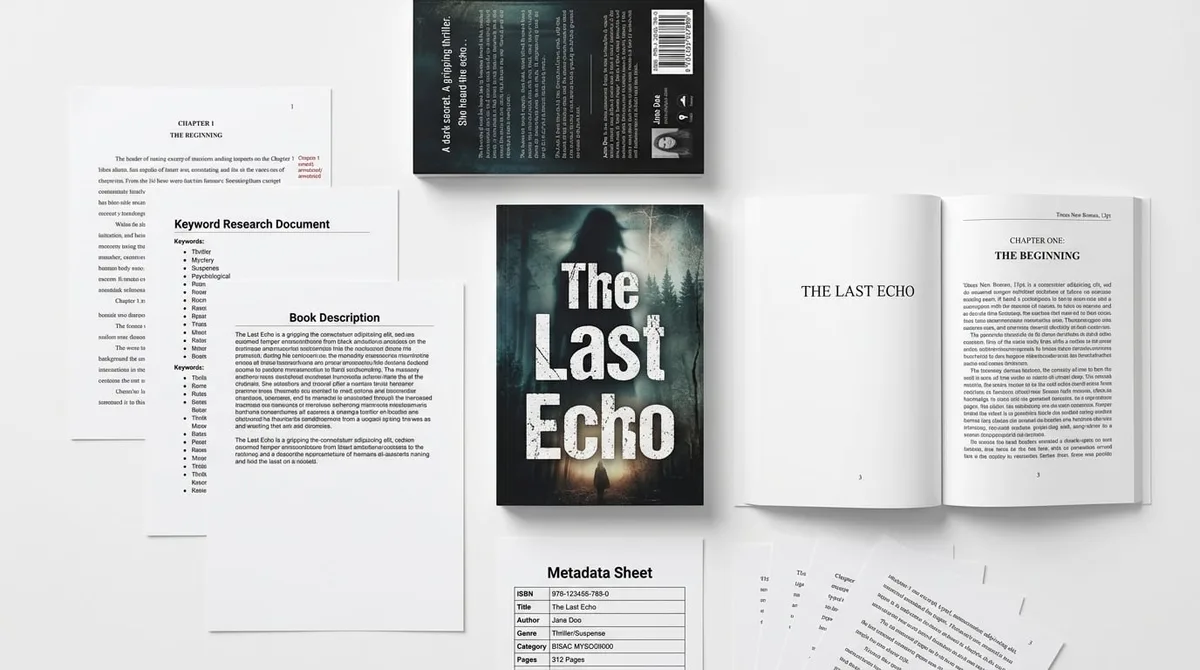
This walkthrough follows one simple idea all the way to a KDP-ready package: what gets decided, what files are created, what compliance checks happen, and where KDPBuilder fits if you want a studio workflow instead of a pile of disconnected prompts. It is not a promise of Amazon approval or sales. It is a practical model for building a book that is coherent before you ever reach the KDP upload screens.
The one-line idea we will turn into a KDP package
Raw idea
Start with a deliberately plain concept: “A beginner-friendly 30-day habit tracker for busy parents.” That is enough to build from because it has a reader, a promise, and a format. A real idea to published book workflow begins with something this simple and then adds structure, design, and compliance until it becomes upload-ready.
Here is the working package we will build from that idea:
| Publishing decision | Example for this walkthrough | Why it matters |
|---|---|---|
| Working title | One Small Habit a Day | Signals a simple outcome, not a vague productivity theme |
| Subtitle | A 30-Day Habit Tracker for Busy Parents | Names the audience, format, and timeframe |
| Reader promise | Help busy parents build one small habit without adding planning time | Controls tone, structure, cover direction, and metadata |
| Format | Paperback workbook, 6 x 9 inches, approximately 90 to 110 pages | Guides interior layout, margins, page count, and cover spine setup |
| Primary asset | Daily tracker pages, weekly reflections, habit selection guide | Turns the idea into a usable product instead of a short essay |
This is a useful middle-of-funnel example because the reader already believes publishing is possible. What they need now is proof that the process creates a coherent package, not a stack of AI outputs. The end result should include a title concept, reader promise, outline, manuscript plan, interior, cover brief, metadata, AI disclosure notes, and a KDP upload checklist.
Reader promise
Turn the raw idea into a promise a buyer can understand in one sentence: “Help busy parents build one small habit a day without needing extra planning time.” That sentence tells you the tone, the audience, the outcome, and the likely structure. If the idea cannot be expressed as a clear promise, it is not ready to become a book package.
Final package checklist
- Working title and subtitle
- Reader promise in one sentence
- Chapter outline or section map
- Manuscript draft or content plan
- Interior formatting plan
- Cover direction brief
- Metadata: description, keywords, categories
- AI disclosure notes
- Upload-ready file checklist
How to publish a book from an idea without making it look generated
Idea shaping
Most weak AI-assisted books fail before the first draft. The idea, outline, tone, cover, and metadata do not feel like they belong to the same product. A text tool can produce pages quickly, but it does not automatically create a book-shaped offer. A studio workflow starts by shaping the idea before drafting, so every later decision supports the same reader promise.
Product proof: KDPBuilder runs every book through a six-phase studio pipeline — Discovery, Writing, Editing, Design, Covers, Publishing — instead of a single generate-and-dump step. Walk through the pipeline free.
The sequence matters. First, choose market positioning. Second, define the audience and outcome. Third, decide the design direction before the cover is produced. Fourth, run QA before upload. That order keeps the book from reading like a random manuscript with a cover placed on top.
Audience and promise
If you want a publishing package that looks intentional, match the audience to the promise. “Busy parents” suggests short entries, calm visuals, simple instructions, and pages that can be used in five minutes. A beginner workbook should not read like a graduate textbook. A practical guide for hobbyists should not sound like a legal manual.
Insider pro-tip: If your title, subtitle, cover, description, and first three pages do not all describe the same buyer problem, the book will feel assembled instead of authored. Fix that mismatch before formatting anything.
Book-shaped execution
The difference between content and a publishable book is execution. A generator gives you text. A publishing workflow creates a package with deliberate structure: chapter names that make sense in sequence, a cover that signals genre, an interior that reads cleanly, and metadata that accurately describes what the reader is buying. If you want to inspect a finished set of assets before you build, see a complete sample package and compare the components side by side.
The AI book publishing workflow from brief to manuscript
Creative brief
The fastest way to move from one line to a real manuscript is to turn the idea into a creative brief. Use these fields:
- Audience: who the book is for.
- Outcome: what the reader should be able to do after using the book.
- Tone: practical, friendly, expert, playful, formal, or reflective.
- Length: short guide, workbook, notebook, journal, or full-length book.
- Format: paperback, ebook, hardcover, or a combination.
- Exclusions: what the book will not cover.
- Page-level examples: what the reader will see in each chapter or section.
For the habit tracker, the brief might say: “Create a calm, practical workbook for parents who want one manageable habit. Keep each day to one page. Include a short prompt, one tracking box, one friction-removal question, and a quick evening reflection.” That is specific enough to guide drafting, interior design, and the sales description.
The brief becomes the control document for the rest of the process. It keeps the manuscript, cover, and metadata aligned while preventing feature creep. If you are trying this workflow for the first time, try KDPBuilder free with no signup and see how the early stage can produce a real sample before you commit to a full build.
Outline
Build chapter architecture around transformation rather than keyword stuffing. A reader should move from problem to progress in a predictable arc. For the habit tracker example, that could look like this:
- Start here: why small habits work for busy households.
- Choose one habit: a short decision guide and examples.
- Make it easy: remove friction, set a cue, and choose a backup plan.
- Days 1–7: quick-start tracking pages.
- Week 1 review: what worked, what got in the way, what to adjust.
- Days 8–30: daily tracker pages with weekly reflection breaks.
- Finish and continue: review the month and choose the next habit.
A practical outline usually includes 5 to 9 main sections. If the book is a workbook, each section should create space for action: prompts, checkboxes, reflection lines, or planning pages. If it is a guide, each chapter should teach one specific step in order.
Draft and review
Manuscript production should move through five stages:
- Outline: lock the structure before drafting.
- Draft: produce the actual text, prompts, exercises, or page content.
- Human review: check clarity, sequence, tone, and completeness.
- Consistency and originality pass: remove repetition, check for copied phrasing, and confirm the content is your own or properly licensed.
- Formatting prep: convert the manuscript into a layout-ready document.
KDPBuilder fits here as a full-package workflow, not just a raw text generator. The point is to move from brief to manuscript with the surrounding publishing decisions already defined. If you want to inspect the output before moving forward, view a complete sample package.
Drafting still needs judgment. Even if AI helps create an early version, the manuscript should be checked line by line for accuracy, flow, and consistency. The final book should read like a planned product, not a prompt transcript.
From manuscript to designed interior and cover
Interior formatting
A readable manuscript is not yet an upload-ready interior file. Amazon KDP print files must match the selected trim size, page count, paper type, and bleed settings. For print books with bleed, design elements that reach the edge must extend beyond the trim edge so the finished cut does not leave unwanted white borders. Common paperback trim sizes include 6 x 9 inches, but the interior and cover must both match the exact selected specifications.
Interior formatting also covers margins, page numbers, headers, chapter starts, and the visual rhythm of the book. A workbook needs enough white space for writing. A guide may need a cleaner heading hierarchy. A journal may need ruled lines or prompt blocks. Each choice should serve the promise made in the metadata.
Cover direction
Cover direction should come from the promise and audience, not from random image prompts. Before designing, decide what the cover must signal in thumbnail size: genre, topic, audience, and reading level. Then choose typography, layout, and imagery to support that signal.
For the habit tracker, a strong cover brief might be: “Calm, modern paperback workbook for busy parents; soft green or warm neutral palette; large readable title; simple icon or abstract routine motif; no cluttered family stock photo; readable at Amazon thumbnail size.” That brief is more useful than asking for a generic self-help cover because it ties the visual decision back to the buyer.
Design QA
Visual QA prevents the most common upload and buyer-facing mistakes. Check the following before exporting:
- Spine text is accurate for the final page count
- Title remains readable at thumbnail size
- Genre fit is clear from color and typography
- No obvious AI artifacts, warped hands, broken objects, or odd textures
- Margins and bleed match the print specs
- Interior pages are aligned and consistent
Example: if you are building a cookbook or recipe journal, an AI cookbook generator can help assemble content, but the finished book still needs recipe consistency checks, image-rights review, and KDP-compliant design review before it becomes upload-ready.
| Book asset | What KDP expects | Common mistake |
|---|---|---|
| Interior PDF | Matches trim size, margins, and bleed settings | Exporting a generic PDF that does not match the selected print specs |
| Cover PDF | Correct wrap, spine, and back cover dimensions | Using the wrong page count for the spine calculation |
| Metadata | Title, subtitle, description, keywords, and categories must match the content | Stuffing keywords or writing a description that overpromises |
| AI disclosure | Disclose AI-generated text, images, or translations during title setup when required | Assuming editing automatically removes the need to disclose |
Metadata, categories, and the Amazon book creator step
Book description
Before upload, prepare the assets KDP will ask for: title, subtitle, author name, description, keywords, categories, contributors, age and range fields when relevant, and a pricing plan. The Amazon book creator screens are not a strategy engine; they are the place where your prepared decisions are entered. If the assets are unclear, the upload process will expose the problem.
The description should explain the real book, not chase unrelated search terms. Use one sentence for the problem, one sentence for the transformation, and one short line for the format. Keep the language concrete. If it is a workbook, say so. If it is a practical guide, say so. If it is a journal, do not describe it like a textbook.
Example description core: “This 30-day habit tracker helps busy parents choose one small habit, make it easier to repeat, and reflect on progress without long planning sessions. Inside, you will find daily tracking pages, weekly check-ins, and simple prompts for adjusting the habit when life gets messy.”
Keywords
Keywords should reflect how readers actually search for the topic, but they should still describe the book honestly. Do not overload them with broad phrases that the content does not support. A good keyword set may include audience, format, problem, and niche, but it should never overpromise a feature that is missing from the manuscript.
This is also where people comparing a book bolt free alternative should pay attention to workflow rather than labels. KDPBuilder is positioned for creators who need more than text generation: organized assets, design direction, and upload logic that work together.
Categories and pricing
Choose categories based on the real subject and buyer intent. A habit tracker belongs in a productivity, self-help, or journal pathway that accurately reflects the content, not in an unrelated trend category. Pricing should also be planned as part of the package, not guessed after upload. KDP paperback royalties are generally calculated as 60% of the list price minus printing costs for supported Amazon marketplaces, while Expanded Distribution uses a lower royalty rate. Trim size, page count, paper choice, and price all interact, so check the current KDP calculator before setting the final number.
Metadata is not just administrative. It affects discoverability, reader expectations, and compliance. If the description, categories, cover, and interior all point in the same direction, the book feels intentional.
Amazon KDP AI generated books policy 2026: disclosure before upload
AI-generated vs AI-assisted
If you are researching amazon kdp ai generated books policy 2026, the practical rule is simple: KDP requires publishers to disclose AI-generated text, images, or translations during title setup when the content meets Amazon’s definition of AI-generated. AI-assisted content is described differently in KDP’s disclosure language, but that does not remove the need for quality, rights, and compliance checks.
Product proof: KDPBuilder’s /try-free workflow generates a real sample in the browser, such as a themed word-search page, with no account and no credit card. Try it now — no signup needed.
This matters because creators sometimes assume AI use is irrelevant if they edit the draft. Do not treat disclosure as a loophole. If the content falls under the disclosure requirement, disclose it during setup. If the content is AI-assisted rather than AI-generated, still review it carefully and make sure it meets KDP standards.
What to disclose
Use the disclosure fields honestly when the material qualifies. The practical interpretation is straightforward: if AI generated the text, images, or translation that you are publishing, disclose that during title setup. If you used AI as a brainstorming, outlining, or editing tool and the final content was created or substantially controlled by you, that is a different situation, but the final publication still needs to be accurate, original, and compliant.
Related phrasing people search for includes amazon kdp ai generated content disclosure policy and amazon kdp ai generated content disclosure guidelines official. Those terms point to the same operational idea: use Amazon KDP’s current help pages and title setup flow as the source of truth, disclose when required, and do not try to hide the role AI played in the book’s creation.
What disclosure does not solve
Disclosure is not the same as approval. It does not guarantee Amazon acceptance, and it does not fix weak writing, rights problems, low-resolution images, or formatting errors. A compliant book still needs to look and read like a real publication. If the content is generic, repetitive, or poorly designed, the disclosure checkbox does not change that.
This article is a practical publishing workflow, not legal advice. The safest process is to prepare the full package first, then verify the disclosure state during title setup before upload.
Upload-ready KDP package checklist
Files
By the time you reach upload, the package should already be assembled. A complete KDP-ready package usually includes:
- Print-ready interior PDF
- Cover PDF with correct wrap and spine
- Ebook file if applicable
- Title and subtitle
- Author name and contributors
- Description
- Keyword set
- Category plan
- Pricing notes
- AI disclosure notes
- Launch QA checklist
If any one of these is missing, the upload is not truly ready. A finished package is more than a manuscript plus a cover image.
Metadata
Before submitting, confirm that the title, subtitle, author name, and description all match the book’s actual content. Check that the categories fit the topic and that the keywords reflect the audience honestly. If age or range fields apply, complete them consistently. This is basic but essential, because mismatched metadata is one of the fastest ways to make a book look improvised.
Compliance and QA
Use this practical preflight checklist:
- File size is within current KDP upload limits
- Trim size matches the selected KDP format
- Bleed settings are correct
- Fonts are embedded or properly converted
- Cover dimensions match page count and trim
- Images are high enough resolution for print
- Barcode placement leaves usable space
- No copyright or rights issues remain unresolved
- Content does not violate KDP policy
- AI disclosure has been completed where required
For common rejection patterns, see the related guide: KDP Upload Rejected? 9 Real Reasons and Fixes. The goal is to catch problems before they become a failed submission. Before you upload, it can help to compare your files against a complete sample package.
What this walkthrough proves about KDPBuilder
Proof over promises
This walkthrough shows the difference between a scattered idea and an organized publishing package. KDPBuilder is built to help creators move from one-line concept to a cohesive set of assets that includes the manuscript plan, cover direction, interior format, metadata, AI disclosure notes, and upload checklist. That is product proof, not hype.
Studio workflow
The key distinction is that KDPBuilder is not a one-click publishing myth. A studio workflow treats the book as a designed object. It asks whether the package holds together under reader scrutiny and KDP review, which is a different question from whether a tool can produce text quickly.
If you are evaluating whether the workflow fits your project, the quickest next step is to try the pipeline free and see the sample output in the browser before you spend time building the full project.
Next step
If you already have an idea, do not start by asking, “Can AI write this?” Ask the publishing question: Can the finished book survive reader scrutiny, file checks, metadata review, and disclosure requirements? If you want proof before you build, review a sample package. If you want to test the workflow, use the free evaluation. If you are ready to continue, start a free account and assemble the publishing package with the right structure from day one.
FAQ
How do I go from idea to published book on Amazon KDP?
Start with one clear reader promise, then turn it into a brief, outline, draft, cover direction, interior layout, and metadata set. Once the files match KDP’s trim size, bleed, and formatting rules, complete the upload screens and run a final QA pass before submitting. The important part is sequence: concept first, package second, upload last.
What is the best AI book publishing workflow for a beginner?
The best workflow is the one that prevents disconnected assets. Begin with audience and outcome, then create the outline, draft the content, review it for consistency and originality, and only then move to formatting, cover, metadata, and disclosure. Beginners usually fail when they start with the tool instead of the publishing plan.
What does the Amazon KDP AI generated books policy 2026 require?
At a practical level, KDP requires disclosure of AI-generated text, images, or translations during title setup when the content qualifies under Amazon’s current language. AI-assisted content is treated differently in KDP’s disclosure guidance, but you still need to ensure the book is accurate, original, and compliant. Disclosure does not replace quality control or rights clearance.
Where can I find the Amazon KDP AI generated content disclosure guidelines official?
The official guidance is located within Amazon KDP’s help materials and title setup flow, where the disclosure fields are presented during publishing. Use the language there as your source of truth, and do not rely on guesses, summaries, or third-party shortcuts. If the content qualifies, disclose it directly during setup.
Is KDPBuilder a book bolt free alternative?
It is better to think about the workflow than the label. KDPBuilder is positioned as a publishing-package tool for creators who need more than prompt-based content generation. If you want a system that helps organize the manuscript, design, metadata, and compliance steps together, that is a different need than a simple generator comparison.
Can an AI cookbook generator create a KDP-ready cookbook by itself?
Not by itself. A cookbook still needs consistent recipes, measurement checks, rights review for any images, tested formatting, and a KDP-compliant interior and cover. AI can assist with drafting or structure, but the finished book still needs human review and a publishing workflow that verifies every asset before upload.
To evaluate the workflow without creating an account, try KDPBuilder free and walk through the sample in your browser. If you want a faster proof-first view, see a complete sample package; and if you are ready to keep building after that, the free account includes 75 credits and no card.
Turn this idea into a book — free sample
Type a book idea and we'll generate a real cover preview in about a minute. No signup, no card.